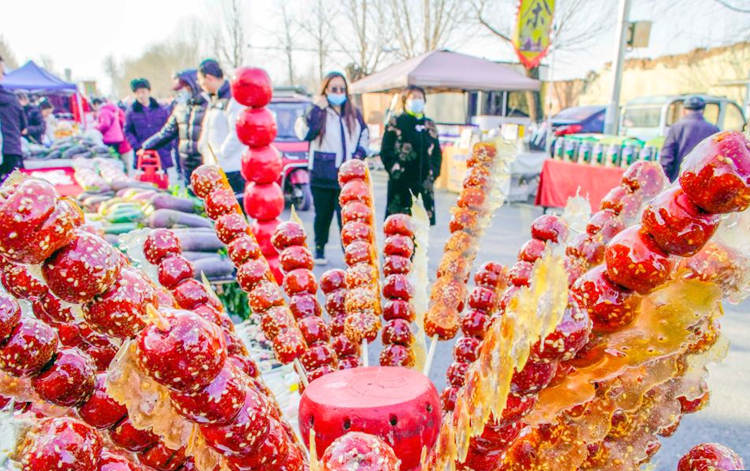
China's Spring Festival fuels strong demand for ASEAN fruit
January and February are the busiest months of the year for fruit vendor Huang Chunlian. As the Spring Festival approaches, orders and inquiries flood in for her fruit, nuts and other snacks imported from the Association of Southeast Asian Nations (ASEAN).
At her store in Pingxiang, a city on the China-Vietnam border in south China's Guangxi Zhuang Autonomous Region, the phone kept pinging with new messages as she juggled orders from regular customers, while posting social media updates advertising Thai Monthong durian and pomelo gift boxes.
"Beyond individual shoppers, many companies placed bulk orders of fruit to send out as Spring Festival gifts for employees," Huang said.
The Spring Festival is China's most important family reunion occasion and a peak time for Chinese families to splurge on premium fruit and nuts to treat homecoming family members and visiting relatives. Imported fruit, including cherries from Chile and tropical fruit from ASEAN, has successfully joined this festive shopping spree in recent years.
Li Lan, a resident of Nanning, regional capital of Guangxi, said imported fruit is now essential to her family's holiday preparations. "Thai pomelos are a must, some for ourselves and some as gifts when visiting relatives."
"In the past, I bought them in stores. This year, I joined several chat rooms for group buying of fruit," she said, adding that ordering via online platforms makes it easier to compare prices and quality while also saving time.
Importers based in Guangxi, which is located close to Southeast Asia, notably testify to the surging demand for ASEAN fruit ahead of the festival.
Ma Chengyi, general manager of Guangxi Ningming Tianze Customs Broker Co., Ltd., said his company has imported more than 100 truckloads of ASEAN fruit through Aidian port since January, with cargo value exceeding 45 million yuan (about 6.48 million U.S. dollars), up 63 percent from a year earlier.
"January isn't durian's harvest season, but we still imported around 200 containers of durian and other fruits last month, compared with only dozens during the same period last year," said Wu Mingzhe, manager of Guangxi Asia Global International Freight Co., Ltd.
Both Ma and Wu attributed their business boom to China's growing appetite for ASEAN fruit, as well as faster customs clearance.
China is one of the world's largest fruit consumer markets. Data show that in 2025, China imported 9.03 million tonnes of fruit worth 18.94 billion U.S. dollars, an increase of 17.5 percent and 6.7 percent, respectively.
Durian accounted for a large share of these imports. Last year, China imported 7.49 billion U.S. dollars' worth of fresh durian, 7.1 percent more than the previous year, while import volumes jumped nearly 20 percent to 1.87 million tonnes. Thailand and Vietnam were the main durian suppliers.
At border ports in Guangxi, a major gateway for ASEAN agricultural products entering China, durian, mangosteen and other fresh fruits arrived in trucks and flowed through fast-track customs channels to markets nationwide in a seasonal spike traders have dubbed a "sweet travel rush."
Fan Lihui, an official with the border inspection department at Friendship Pass, said updated clearance systems have reduced inspection time to roughly 15 seconds per truck, improving efficiency by approximately 75 percent.
"Jackfruit picked in Vietnam's Tien Giang province in the morning can reach fruit markets in Nanning by evening and be shipped onward across China," Fan said, adding that digital platforms now allow companies to submit customs declarations remotely, eliminating the need for paper documents.
Also in Guangxi, Qinzhou Port has been expanding maritime routes linking China with major fruit-producing regions in Southeast Asia, including Thailand, Vietnam and Malaysia. In 2025, this port operated 44 ASEAN shipping routes, providing an additional channel for fruit imports alongside overland border crossings.
"Chinese consumers' growing preference for fresher, higher-quality imported food is reshaping holiday shopping patterns and supporting continued growth in ASEAN fruit imports," Wu Mingzhe said.
Editor:Lotus
LATEST
- Xi extends Chinese New Year greetings to ring in Year of Horse
- Chinese leaders extend Spring Festival greetings to retired senior officials
- Xi stresses sci-tech self-reliance in building modern socialist country