

Linyi's green fruit and vegetable processing chain grows value-added
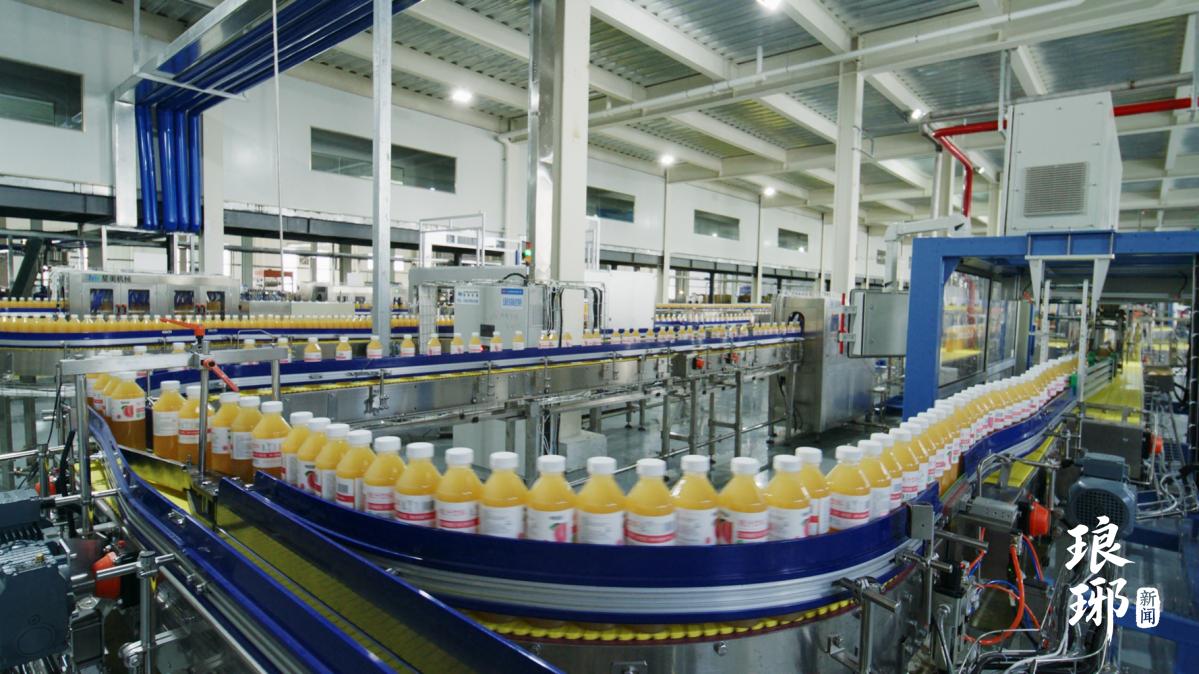
Linyi in East China's Shandong province ranks second in Shandong for both vegetable and fruit output, and supplies most of the country's burdock and honeysuckle — about 90 percent and 60 percent of national production respectively — with seven single products, including honey peaches and cucumbers, holding the largest national market share. In the first nine months of this year, the city's 135 processing enterprises above designated size turned out 8.82 billion yuan ($1.24 billion) of output, up 8.2 percent, faster than the city's average industrial growth.
The task now, officials of the green fruit and vegetable processing chain said, is to move the industry beyond primary processing. Since its establishment in June 2025, the chain's dedicated work team has pushed processing from primary operations to deep processing — NFC not-from-concentrate juices, freeze-dried snacks and functional extracts — and the high-value use of byproducts. Of 91 projects under construction, 37 were completed and commissioned in the first three quarters, with the year's investment plan 64 percent fulfilled. A tiered cultivation system covers leading, above-scale and small firms, with 36 enterprises carrying out technological upgrading. Counties have carved out distinct roles: Lanling focuses on fresh-cut and ready-to-cook vegetables, Pingyi on canned fruit, Hedong on freeze-dried food, and Yinan on functional drinks.
Branding runs on a three-tier matrix of city-level regional brands, county sub-brands and enterprise brands: "Pingyi canned fruit" has completed copyright registration, "Lanling Jiupin" has been filed, "Cangshan garlic" won a gold award at the Panama International Exposition, Yuquan canned yellow peaches passed "Taishan Quality" certification, and nine products including Mengyin honey peaches were named "Yimeng Good Products". An export brand cultivation pool encourages original brand manufacturing over OEM work.
Science and technology are being pulled in through a municipal green fruit and vegetable processing industry technology research institute: 55 enterprises have partnered with 26 universities and institutes, 13 firms are recognized as national technology-based SMEs and six as provincial "specialized and sophisticated" ones; teams from China Agricultural University, Shandong Agricultural University and Jiangnan University have helped break through 10 key technologies, including color protection for NFC juices, with two group technical standards issued and two technologies rated as provincial sci-tech projects. An "AI plus industry" campaign is extending intelligence across production and distribution.
At chain-master Shandong Guotai Food Co, 13 production lines are being joined by six HPP — high-pressure processing — cold-sterilization fresh-juice lines that lock in flavor and nutrition, with new products in NFC juices, composite drinks, food-medicine health beverages and light ready meals. Annual sales have reached 130 million yuan. Wang Gang, an executive of the company, said the firm runs a full-chain traceability system from raw material intake to finished-goods dispatch, has automated key processes, and is building a digital workshop while creating a green factory, with a circular chain that returns processing byproducts to the fields; upstream, it is expanding standardized contract farming with local cooperatives and farmers, and downstream it links packaging, logistics, testing and channel firms.
Zhang Zhenwei of the research institute put the industry's position plainly: Linyi leads nationally in scale and in physical processing and freshness-locking technology, but value-added remains mid-tier, and the sector is accelerating from selling raw materials to selling products. In 2025 the city had more than 590 processing enterprises with whole-chain output above 130 billion yuan, home to the country's largest dehydrated vegetable cluster and the world's largest freeze-dried fruit and vegetable base — Pingyi alone supplies more than a third of national canned fruit output. Annual freeze-dried output tops 50,000 tonnes, with Bahu town's FD fruit holding over 80 percent of the European and American markets and FD scallion 60 percent of the Japanese market; quick-freezing at minus 35 degrees Celsius and unmanned smart workshops rank with the industry's best, and a full-chain digital traceability system logs a compliance rate above 99 percent. The institute's next step is a "1+3+N" sci-tech system: the institute itself, county-level R&D centers in Pingyi, Lanling and Yinan co-built with the Chinese Academy of Agricultural Sciences, and paired enterprise-university projects, plus concept-validation and pilot-testing bases.
Editor:韩蒙蒙