

One building, one bridge: how the selection center rewires Linyi's export trade
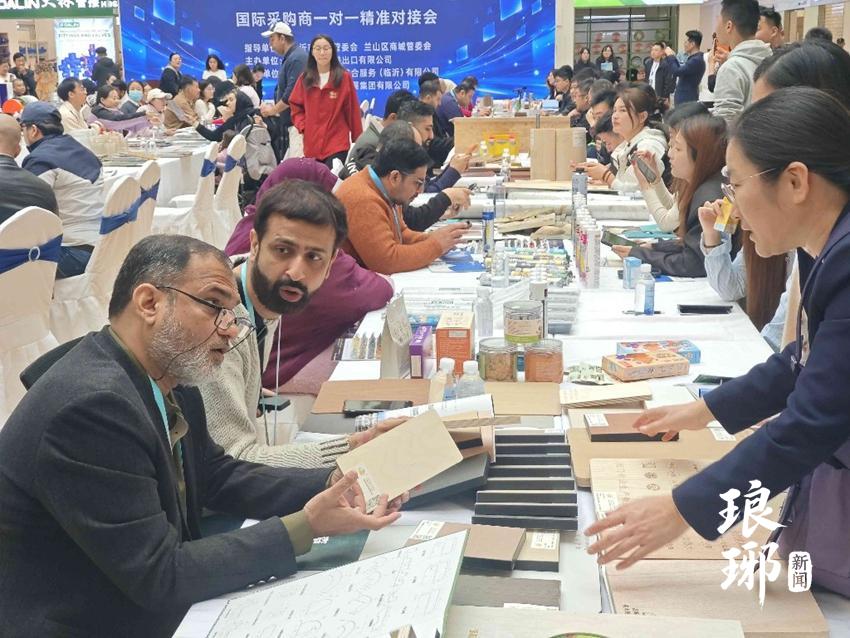
"This trip to Linyi — there is too much to see," said Jabbar Naveela, a buyer from Pakistan, examining a power tool in the lobby of the Linyi International Product Selection Center. Bona, a Nigerian buyer based in Guangzhou, was more direct after a lap of the building: "Finding goods used to mean two factories a day at most. Now one building holds the source factories. Much easier, and the prices are good."
Such scenes are now routine at the 62,000-square-meter center. Linyi's 136 specialised wholesale markets are scattered across the city, so foreign buyers could previously visit only one or two factories per trip, while many small local plants had capacity but no channel and acted as subcontractors for trading companies.
The center's answer is "one building, one city". It operates a "chain leader plus chain members" model in which a single storefront links a dozen or more source factories, so that more than 300 chain-leader companies are backed by 5,000 to 6,000 local manufacturers. A buyer who deals with one merchant reaches an entire supply system.
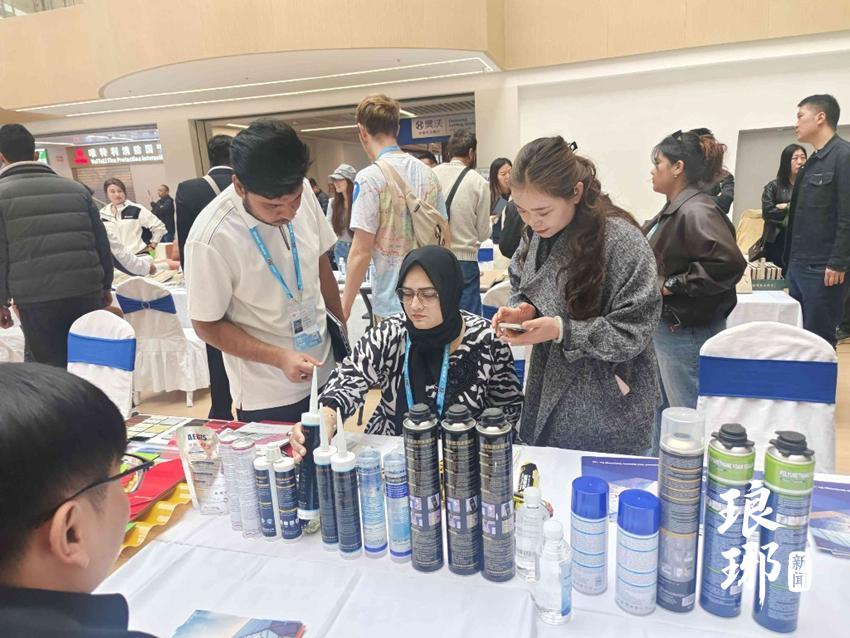
"'Chain leader plus chain member' is not simply putting merchants together. We take orders first, then match them to Linyi factories with the capacity to fill them, so everyone goes abroad together," said Zhu Kongkong, deputy general manager of Linyi Junhai International Supply Chain Management, which operates the center.
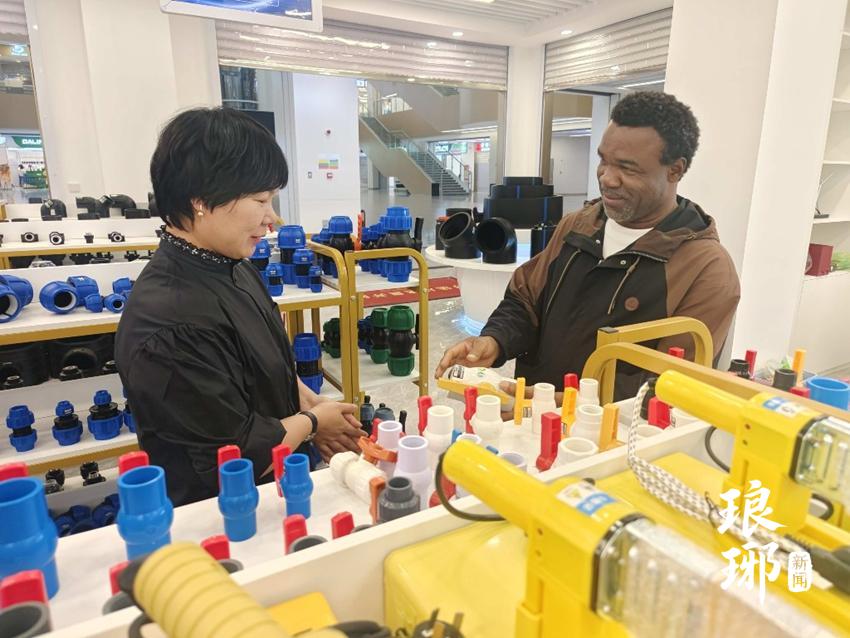
At the booth of Dihui Pipes, the effect is visible. "The first thing a foreign buyer does is look at the product list, down to the weight and dimensions of each carton, because that determines how much fits in a container," said Tian Aiping, the company's head and one of the first chain leaders to move in. Her display carries not only her own full range of pipe fittings but plumbing accessories from nearby chain-member plants. She passes buyer requests to those suppliers without adding margin: "Take Linyi's products out first."
The model has given traditional factories their first taste of foreign trade. Zhang Wanying of Linyi Longtang Plastics has made cleaning products for 10 years with a solid reputation in Southeast Asia, but exported only through outside trading companies. "Stable output, but no contact with end customers and no pricing power," she said. With a display space of its own, the company now has orders from India and Indonesia.
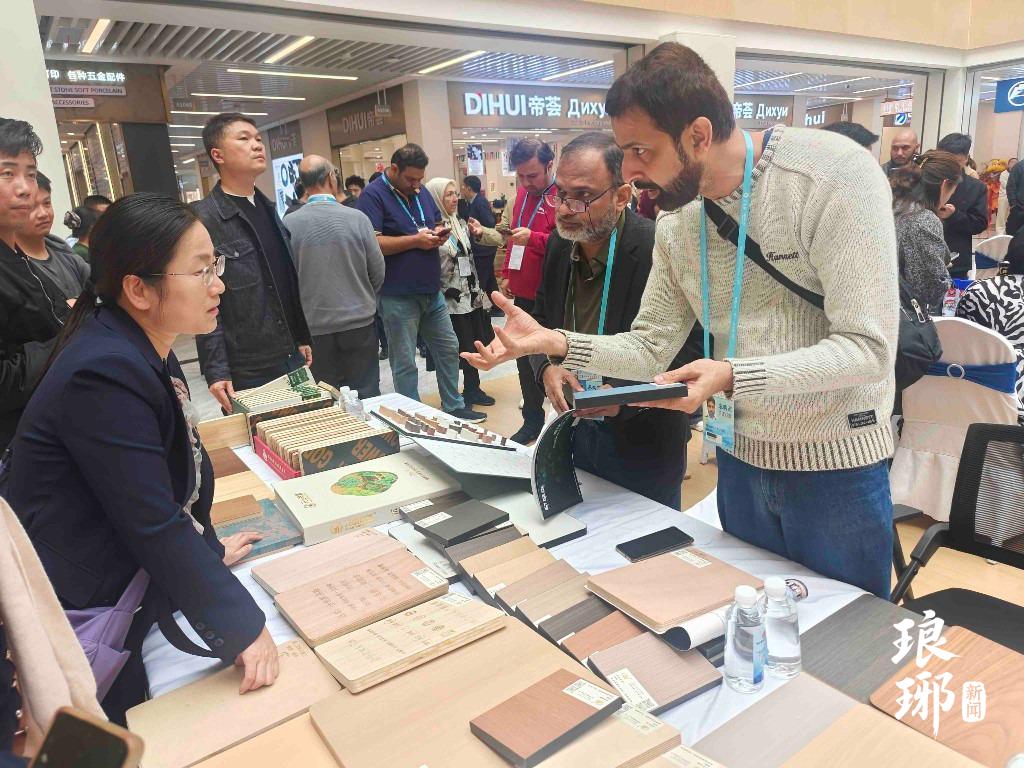
For Wang Meng, foreign trade head of Menglu Enamelware, 11 years of domestic home goods business turned into exports after the center's training helped her land customised orders from Russia and the Middle East through social media. Xinglong Toys moved its entire sales team into the building and installed its attendance machine there. Luran Decorative Materials, which previously took more than 90 percent of its orders as a subcontractor and was held back by language, now has buyers inspect samples at its booth with the center's staff handling interpretation.
The center brought in the Yiwu Yimaotong team, which was deeply involved in running the Yiwu International Trade City, for its global supply chain and cross-border trade experience. "Linyi did not copy Yiwu; it benchmarked Yiwu and chose a different position. Yiwu is strong in consumer goods; we anchor producer goods," said Liu Yongqiang, deputy general manager of Lanshan Industrial Development Group and chairman of Linyi Trade City Development Group. Linyi's strength is hardware, machinery, building materials and labor protection products, where it leads the country in output and sales and holds a clear price advantage.
The operators also run training for companies new to exporting, teach domestic traders to sell cross-border, and provide a foreign trade service team that handles customs declaration and inspection, booking and shipping, and overseas clearance. The center is building a four-part system — international selection center, global order center, international logistics center and global digital trade center.
The shift is from touring factories to touring one floor, and from subcontracting to first-hand orders. A few Linyi companies had already gone global on their own — Haoduobao has opened stores in nearly 40 countries under a whole-store export model, and Xinminghui has taken suppliers abroad on its digital supply chain — but for thousands of small plants, channels, language, customs and settlement remained barriers. The center positions itself as a bridge builder between government and market: it does not trade in place of companies, but organises scattered capacity, brings global demand to Linyi factories and runs the paperwork of going abroad. "We want to make this the city's infrastructure for the global market," Liu said.
Editor:韩蒙蒙