

Geothermal brigade turns the ground's warmth into a low-carbon ledger
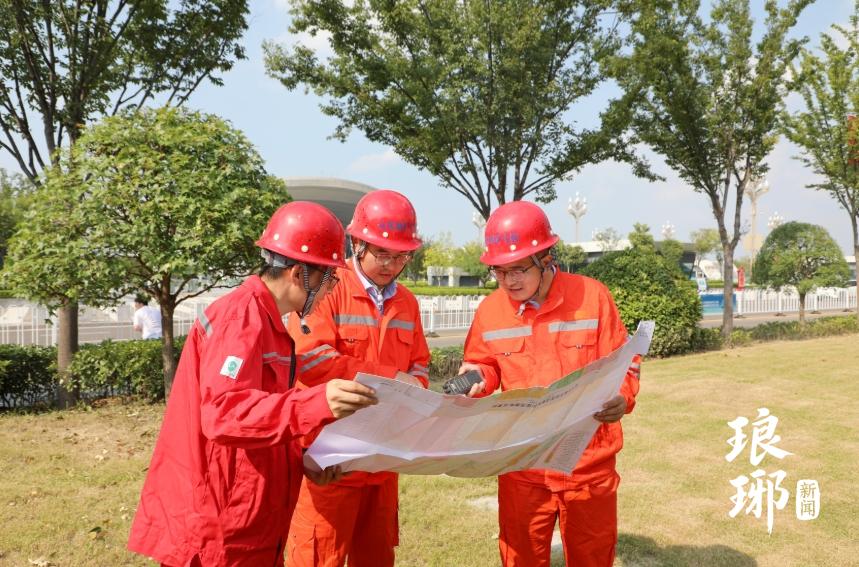
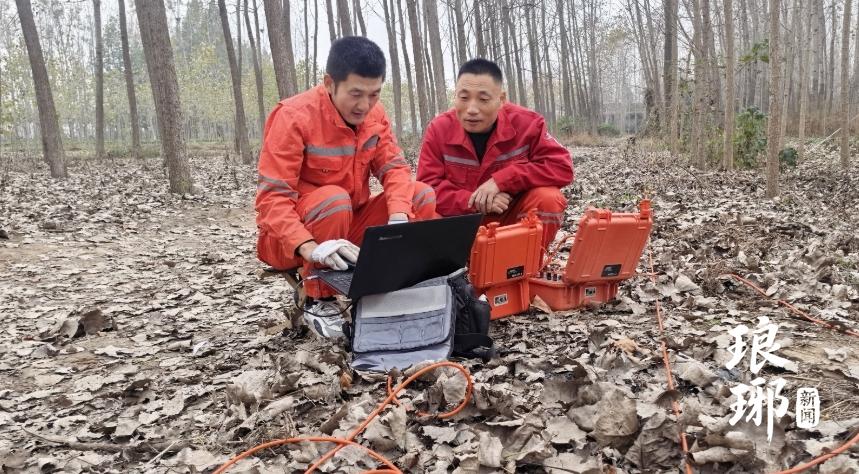
In the frost-covered fields of southern Shandong, geologists of the No.7 Geological Brigade of the Shandong Provincial Bureau of Geology and Mineral Resources are laying out electrodes along survey lines, reading the ground's resistance curve by curve. The work is part of a 2026 survey and evaluation of the Tancheng geothermal field, a ministry-provincial agreement project focused on the region and the southern end of the Yishu fault zone, combining geothermal survey, geophysical exploration, drilling, well logging, output tests and full water analysis to establish how much heat the field holds and how it might be used.
Linyi is known as a geothermal city and a hot spring city. The brigade compiled the city's 2021-2025 plan for geothermal exploration and use, reviewing records of 29 geothermal wells with a permitted extraction total of 7.0823 million cubic meters a year, equivalent to about 45,000 tonnes of standard coal, and mapping 49 geothermal anomaly zones whose prospective resources of about 140 million cubic meters a year could replace around 910,000 tonnes of standard coal annually. A new round of planning is under way.
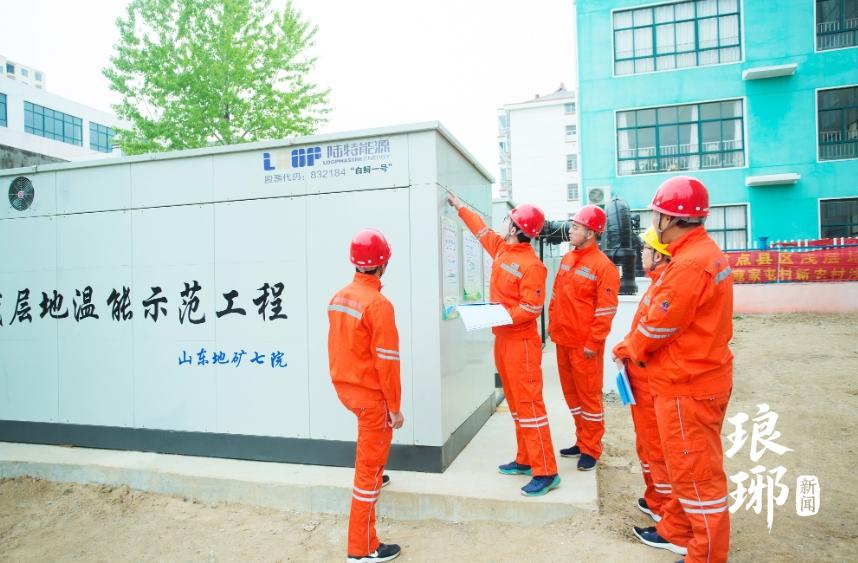
Its project evaluating shallow geothermal resources in the piedmont plains of central and southern Shandong won a first prize in the 2025 Shandong Energy Science and Technology Awards. In the Yihe New District, drilling and thermal response tests put the capacity of shallow geothermal energy within 120 meters of the surface at about 4.47 million tonnes of standard coal; if developed across the district it could save about 2.6 million tonnes of standard coal a year and cut carbon dioxide emissions by about 2.2 million tonnes, worth about 260 million yuan in avoided environmental costs. A ground-source heat pump project in Koutun village is already running as a rural template.
The brigade's own office building on Mengshan Avenue in Lanshan district runs its air conditioning on shallow geothermal energy through a heat pump system. For the 3,500-square-meter building, seasonal running costs are about 50,000 yuan — 97,000 yuan a year cheaper than a conventional setup with municipal heating, saving 41.3 tonnes of coal and 111.02 tonnes of carbon dioxide; against a central-air-conditioning setup it saves 111,000 yuan a year and cuts 127.95 tonnes of carbon dioxide.
In the city's geological survey the brigade identified 12 geothermal anomaly zones with development potential, and detected high-concentration helium anomalies in the geothermal system along the Linyi section of the Tanlu fault zone — the first such finding — flagging three helium exploration targets. Helium is a scarce strategic resource, and the discovery opens another use for geothermal wells. The brigade also provides reserve reports, development plans and mine-environment protection plans for geothermal operators including Tangfangya in Hedong district, Tangtou hot spring, Tianmu hot spring in Tancheng and the Tongjing and Songshan geothermal fields in Yinan.
Editor:韩蒙蒙