

Hedong district passes on Yimeng spirit through generations
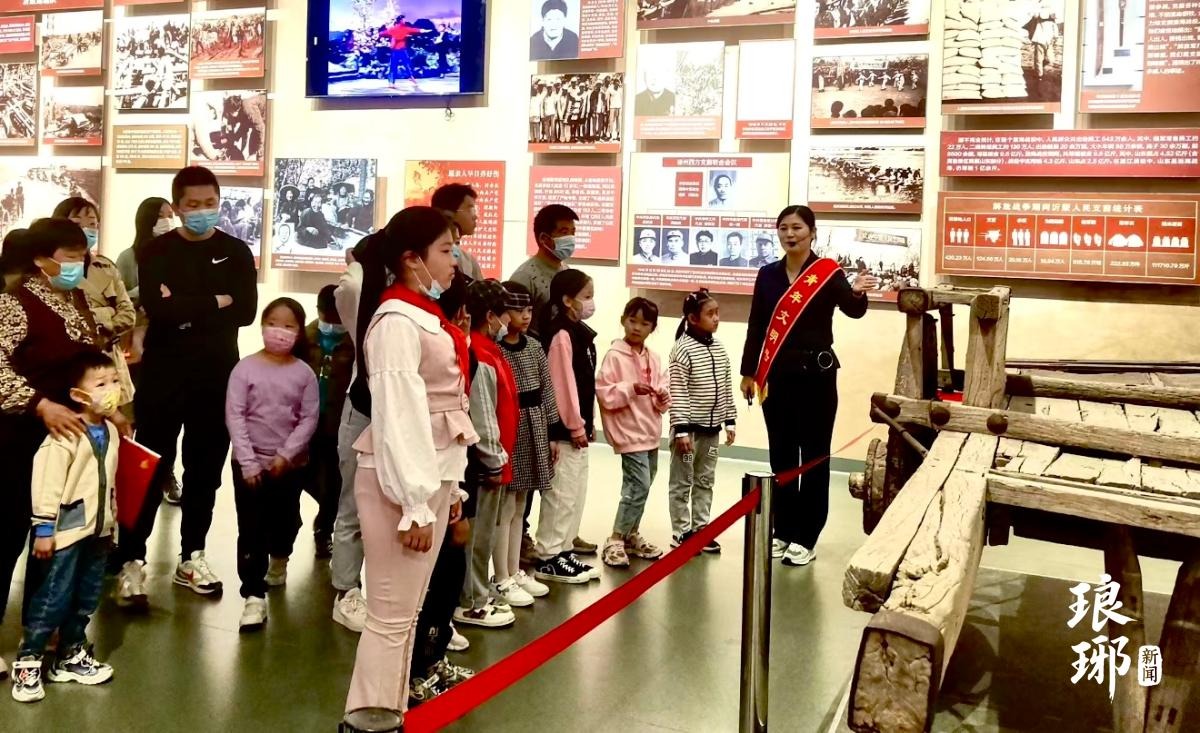
At 10 am on Oct 7, four students from Xingyuan Primary School and Beijing Road Primary School in Hedong district, Linyi in East China's Shandong province, stood once again in the exhibition hall of the former headquarters of the East China Field Army and the New Fourth Army, their young voices rising as Red Scarf guides.
During the National Day holiday, the memorial hall in Hewan village drew steady streams of visitors, who filed through to hear stories of the war years and pay tribute to earlier generations. A red thread running from the New Fourth Army's last headquarters and the birthplace of the East China Field Army, through the smoke of battle, connecting classrooms and streets, continues to this day.
From 1946 to 1947, the East China Bureau of the Communist Party of China and the New Fourth Army headquarters were stationed in Qianhewan, where Chen Yi, Su Yu, Zhang Yunyi and other revolutionaries of the older generation directed campaigns including the battles of Subei and Lunan, and planned operations for Laiwu and Menglianggu. In January 1947, the East China Field Army was formally established there.
During the war years, residents of Hewan and surrounding areas in Yimeng supported the New Fourth Army and the East China Field Army. People vacated their homes for use as military offices and quarters, young men joined the army, and women made military shoes and pancakes through the night for the front lines, writing a chapter of support for the army in the region's revolutionary history.
In one corner of the exhibition hall, a brown leather suitcase records a story of the close bond between soldiers and civilians. "This is a suitcase used by Marshal Chen Yi and his wife Zhang Qian — the original item. In June 1946, Chen Yi's family lodged with Zhong Enzhang's family," said Chen Zhaojun, an instructor at the district's Party spirit education base management service center.
Chen Yi's family stayed in the villager's home for more than eight months. Zhang Qian helped with farm work and taught women to read, and their son Chen Xiaolu was born there, cared for by the landlord family as if they were relatives. "In February 1947, the troops were about to move. Before leaving, they decided to give the suitcase to the landlord. It had accompanied Chen Yi and Zhang Qian across the country," Chen Zhaojun said.
"A blanket, a pair of military shoes, a kerosene lamp — all are vivid teaching materials," Chen Zhaojun said. "Behind every item is a moving story that bears witness to that deep bond."
Other stories are equally memorable: Wang Daoen of Wangjiayan village in Tangtou subdistrict became the village youth salvation association leader at 15 and took part in nearly 300 battles of all sizes; Wang Jiyin joined the army in 1946 and was cited for merit 12 times; and Chen Fengying, a model military dependent in Danzhangjie village, Tanghe town, sent five of her children to join the army.
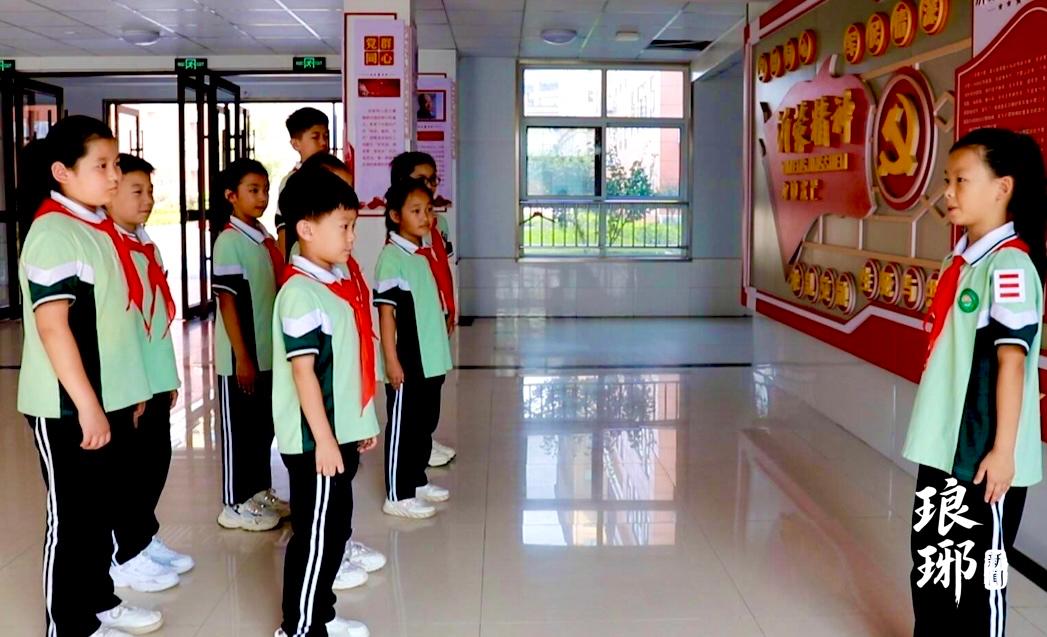
On Sept 30, a special music class was held at the teaching and research office of Junbujie Primary School in Hedong district. "This song, called 'Commander Chen Yi Came to Our Home,' was composed in Qianhewan village and discovered when the district's musicians' association was compiling red music resources," said teacher Song Hemei.
The school's red heritage corridor drew attention, with Young Pioneers wearing red scarves telling revolutionary stories with feeling. "I am a member of the school's Red Scarf lecture team and I want to tell revolutionary stories to more people," said student Liu Yunfei.
The district's "Yimeng Red" Red Scarf guide program was selected as a national model for Young Pioneer guide activities, having trained more than 400 young guides and built a full chain covering recruitment, training, practice and incentives. Volunteer guide sessions on weekends and holidays have exceeded 1,000, reaching nearly 100,000 people in person.
Hedong district has used local red venue resources to develop a series of micro-courses, sharing them through daily first ideological and political classes, ethics lectures and public accounts to pool resources among families, schools and society.
This year, the district has taken innovative forms of the Yimeng spirit to universities and museums across the country, including the Guangdong-Hong Kong-Macao Greater Bay Area and Xinjiang, along with youth exchange activities.
During the National Day holiday, a public speaking class for children was held in Mengyubu community. Resident Meng Xianglan praised the class, saying it helps her child put down the phone and learn something at the same time.
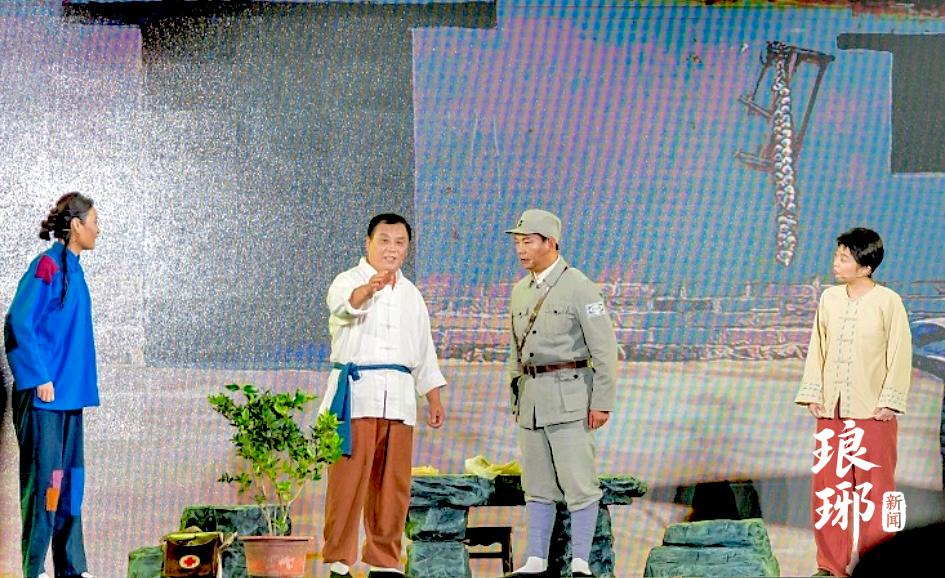
Since last year, Hedong district has established a "cultural academy partner" mechanism, selected as a national case of high-quality public cultural service development, linking government, society and residents to shift quality cultural resources from passive delivery to proactive outreach. On Sept 12, volunteers and residents in Lijiazhuang community, Jiuqu subdistrict, shared red memories through music. An original situational drama has been well received, and a short play won first prize in a provincial public lecture competition.
The district has held more than 480 such cultural service activities this year, selecting more than 20 short plays and serving over 50,000 residents. Under its effort to improve official conduct and capacity, district leaders have gone to the grassroots, collecting and resolving 307 issues in livelihood support, grassroots governance and industrial development.
Editor:韩蒙蒙