

Underground Grand Canyon reinvents itself after two decades of sightseeing
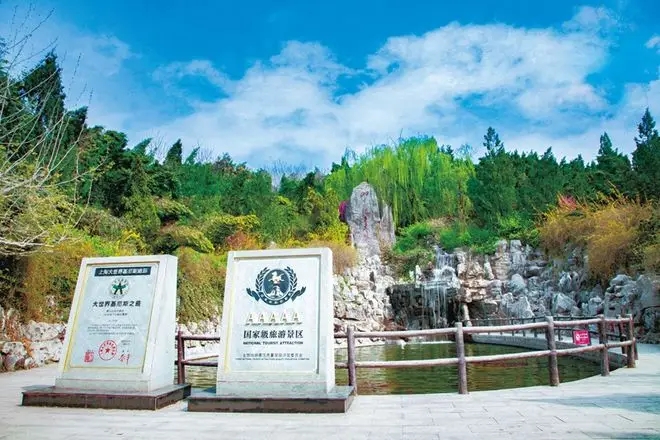
In the tourism map of Shandong, Yishui county in Linyi, East China's Shandong province, was once an outlier. Without famous mountains or golden coasts, the county leveraged an underground karst cave two decades ago to create what became known nationwide as the "Yishui tourism phenomenon".
From developing the Firefly Water Cave and the Underground Grand Canyon around 2000, to winning the national 5A scenic area rating in 2020, to becoming the first cave tourism enterprise listed on the stock market in China, the scenic area was once seen as a fourth hot line beyond Shandong's classic trio of "one mountain, one water and one sage".
Now, the pioneer that rose to fame with "China's first underground river drifting cave" faces a tougher question: after drifting through the same cave for twenty years, what new experience can it offer?
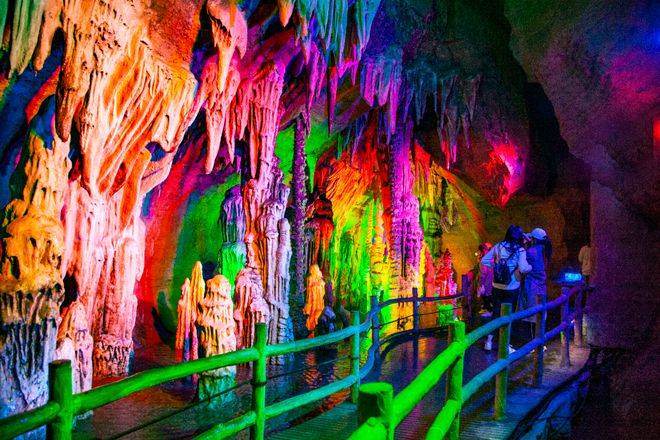
The 6,100-meter cave, nearly 100 meters deep, holds a 1,000-meter underground river drifting route certified by the Shanghai Great World Guinness Records. In 2025, a special report by the Republic of Korea's Yonhap News Agency pushed the site into international view, followed by 12 ROK media outlets. During this year's spring holiday, visitor numbers and revenue of the Firefly Water Cave and Underground Grand Canyon surged 532 percent and 283 percent respectively.
Yet the pressure of a "dated attraction" is real. In March 2023, the scenic area did something rare in the industry: it invited media to visit and point out its weaknesses. At the symposium, Kong Jie, president of the operator Longgang Group, laid the shortcomings on the table — how to extend from inside the cave to outside, from sightseeing to ecological leisure, from passive experience to active participation.
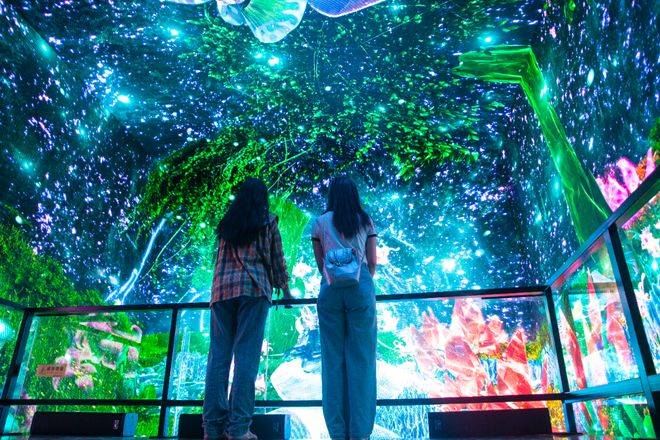
Cave tourism has a natural ceiling: closed space, linear routes and a single experience make visitors "leave right after seeing". The operator's response is not to start over, but to work on both the depth and the boundary of the "cave". In 2025, the drifting route was upgraded with sound, light and electric effects, and a new immersive project combining holographic projection, AR interaction and interactive floors turned the ancient cave into a dialogue between geology and digital technology. Outside the cave, a pet paradise, adventure island and water world have followed, with investment exceeding 50 million yuan.
The real variable came from outside. In 2026, a cooperation project between the scenic area and Shandong Culture and Tourism Group was approved, with new projects such as the "Eye of the Earth" and a gravity exploration park written into the plan, aiming to build China's first "underground city" themed entertainment cluster.
Industry observers share a common judgment: the real breakthrough of cave tourism lies not inside the cave, but outside; not in the landscape itself, but in the consumption chain it triggers. The cave is an entrance, not a destination — turning visitors from "people looking at rocks underground" into "people staying above ground" is the core indicator of the old scenic area's renewal.

The transformation also rests on an easily overlooked foundation: service standards. As early as 2012, the two scenic areas were among the province's first tourism standardization pilot units, and in 2018 they led the drafting of Shandong's first group standard for the tourism industry, the Service Quality Specification for Cave Tourist Attractions.
Whether the renewal succeeds depends not only on whether new projects can attract traffic, but on whether the scenic area can hold the visitors, keep them and turn them into repeat customers. The answer, as the operator has learned over two decades, lies in none of the underground rivers.
Editor:韩蒙蒙