AI care robots bring smarter elderly services in Tancheng
"Hello, grandma!" At the Renkang Elderly Care Service Center in Tancheng county, Linyi, East China's Shandong province, a robot about one meter tall with a square screen head greets the residents. The elders call it "Fengqin Aliang" — a robotic caregiver that went on duty in March.
Besides singing songs, the robot plays music, reports the weather and chats with the elderly. When asked about the weather, it not only gives the forecast but also reminds elders to add or reduce clothing. "During its rounds, it is very popular — some elders play with it for an hour," said Xu Xiyu, a technician of Shandong Fengqin Health Industry Co.
At 4 pm every day, the robot starts its patrol of four floors, visiting every room, greeting the elders and taking 360-degree photos that are uploaded to the nursing station's big screen or a mobile app in real time. "Five patrols a day save a lot of labor," said Xie Chaojie, director of the center. More importantly, the robot can accurately detect falls or prolonged bed rest: in July, when an elder accidentally fell, the robot captured the scene and caregivers arrived immediately.
"AI plus elderly care cannot fully replace human caregivers, but it is a valuable supplement," Xie said. The company has also developed a digital human, "Fengqin Housekeeper", with basic emotional communication functions — remembering elders' names and previous conversations. Smart wristbands offer one-touch calling and daily reminders of blood pressure, heart rate and medication. When an elder in Lizhuang town fell at home, he pressed the emergency button and volunteers arrived within about six minutes and rushed him to hospital.
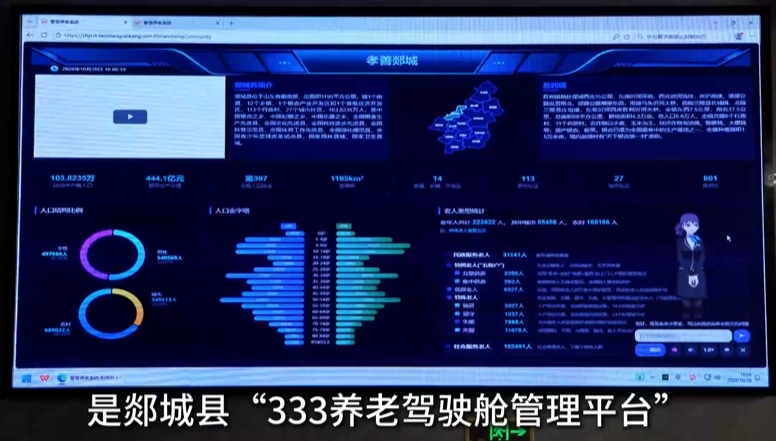
Behind these scenes is the county's "333 elderly care cockpit management platform", a digital elderly care service system connecting the county-level center, township hubs and village-level service stations. Volunteers receive orders and record services through a mini program, while families can track progress in real time — "online dispatching, offline delivery, full traceability". So far the system has helped locate 121 missing elders and provided emergency home services for 145.
For now, the robot's health monitoring functions remain unused to protect elders' privacy and health data. "Across the city, AI elderly care services are still mostly basic functions like nursing and companionship, and the development model is being explored. But AI is indeed helping the elderly enjoy a better quality of life," said Ma Quanzhen of the municipal civil affairs bureau's elderly care division.
At dusk, several elders gathered before the smart care system, chatting with the digital housekeeper amid bursts of laughter — a vivid portrait of the glowing sunset years.
Editor:韩蒙蒙
LATEST
- Global buyers conference to boost Linyi's trade reach, international profile
- Improved work style empowers rural development in Luozhuang
- Volunteers guard the course as 26,000 runners chase the finish line